Where Fat Loss Stops Paying Off After 40
The health payoff of fat loss after 40 mostly stops around 20% body fat. Here's the research-backed threshold, and why chasing single-digit body fat costs more than it's worth.
Every guy who's run a fat loss phase past 40 hits the same wall. The scale slows down, the mirror stops changing week to week, and you start wondering if something's broken.
Nothing's broken. You've just kept pushing an investment past the point where it pays you back.
Most fat loss advice treats every pound the same: eat less, move more, keep going until you hit the number. That works fine in your 20s. Past 40, it's the wrong model. Body fat percentage isn't a straight line where more effort always buys more health. It's a return curve, and the curve bends hard.
What actually happens between 30% and 15% body fat?
Think of it less like a finish line and more like a system with different zones, each with its own payoff and its own price.
High 20s to ~20% is where almost all the real health return lives. This is the zone where visceral fat is doing active damage (impaired insulin sensitivity, background inflammation, blunted stress tolerance) even if you don't feel sick. Most guys don't feel bad enough here to panic. They just feel a little off and chalk it up to getting older.
Dropping through this zone usually feels easier the further you go, not harder. Hunger gets more predictable. Energy stops crashing mid-afternoon. Training starts working with you instead of against you. That's not motivation kicking in. That's a genuinely unstable system settling down.
~20% to ~17% is where the big metabolic wins get locked in (better glucose handling, better recovery, lower long-term disease risk) but the easy money is mostly spent. You can still eat flexibly and absorb a rough week without losing the plot. This is a stable place to live.
~17% down to ~15% is where you stop removing risk and start optimizing margins. Slightly tighter tolerance for a bad night of sleep. Slightly less room for a stressful month. Still very doable. Just no longer free.
Below ~15% is where the bill comes due. Recovery buffers shrink. Stress hormones sit elevated longer. A single disrupted week (travel, a sick kid, a hard stretch at work) causes a setback out of proportion to what caused it. Nothing is wrong, exactly. Everything is just tighter, and staying there stops being a health decision and starts being an aesthetic one.
Where does the real payoff actually stop?
I didn't just eyeball those zones. A 2025 DXA study by Graybeal et al. measured visceral adipose tissue directly (not estimated, scanned) in 154 men, matched for age and BMI, and looked for the point where VAT stops rising gently and starts rising fast.
In White men, that inflection point landed at 19.8% ± 1.3% body fat. Below it, more body fat barely moved visceral fat at all (not statistically significant). Above it, every additional point of body fat came with a sharp, statistically significant jump in visceral fat (p < 0.001). Worth noting: the same threshold didn't show up for Black men in this sample. The researchers found no significant inflection point for that group, a reminder that a lot of "healthy range" charts are less universal than they look.
Where visceral fat accumulation turns sharply positive
| VAT-acceleration threshold (White men, DXA-measured) | 19.8% ± 1.3% |
|---|
That number lines up almost exactly with where the phases above stop being about risk and start being about margins. Below ~20%, you're not buying much more protection. You're paying rent on a smaller and smaller apartment.
Which pattern is sabotaging you? Take the free 2-minute diagnostic
What's the actual cost of pushing past that point?
This is the part most fat loss content skips, because "keep going, you've got more in you" is a better slogan than "you've basically banked the win already, and what's left barely helps."
Past that ~20% line, every phase below costs more for less. You trade flexible eating for tighter tracking. You trade "absorb a bad week and move on" for "a bad week actually derails you." You trade decent sleep mattering for decent sleep being the whole game. None of that is dramatic. It's just a system running with less and less slack, until a normal disruption (the kind you'd have shrugged off at 22%) knocks you sideways.
You don't collapse when you overshoot. You just start paying more upkeep than the result is worth.
What did chasing the last five percent actually cost me?
I ran my own cut like I run most things: tracked, logged, adjusted when the trend actually called for it. The biggest wins (energy, mood, training quality, how my clothes fit) all showed up early, in the same window this research points to. The last stretch, chasing a lower number for its own sake, was slower, noisier, and delivered a lot less for a lot more effort.
Nothing broke. Workouts still got done. Calories still got hit. On paper, everything looked fine. It just felt more expensive to run: less margin for a rough week, less patience left over for the rest of my life. That's the tell people miss. You don't fail when you push past the point of return. You just start paying more than the result is worth.
So where should you actually stop?
For most men over 40 without a specific, time-boxed reason to go lower (a shoot, a competition, a wedding), the high teens is the finish line, not the starting point for the "real" work. You've banked the visceral fat reduction, the insulin sensitivity improvement, the inflammation drop. What's left below that is mostly cosmetic, and it charges rent the whole time you live there.
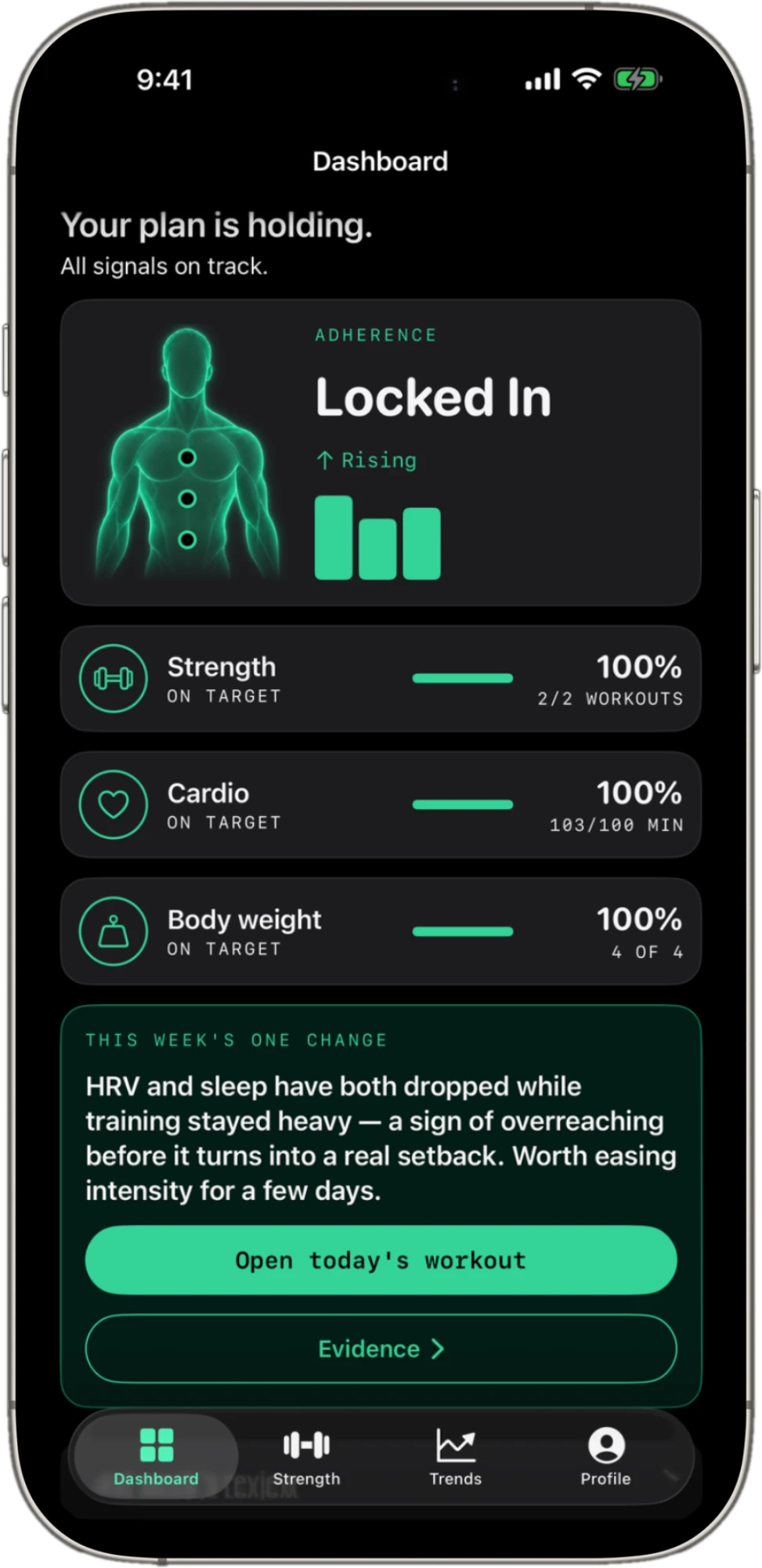
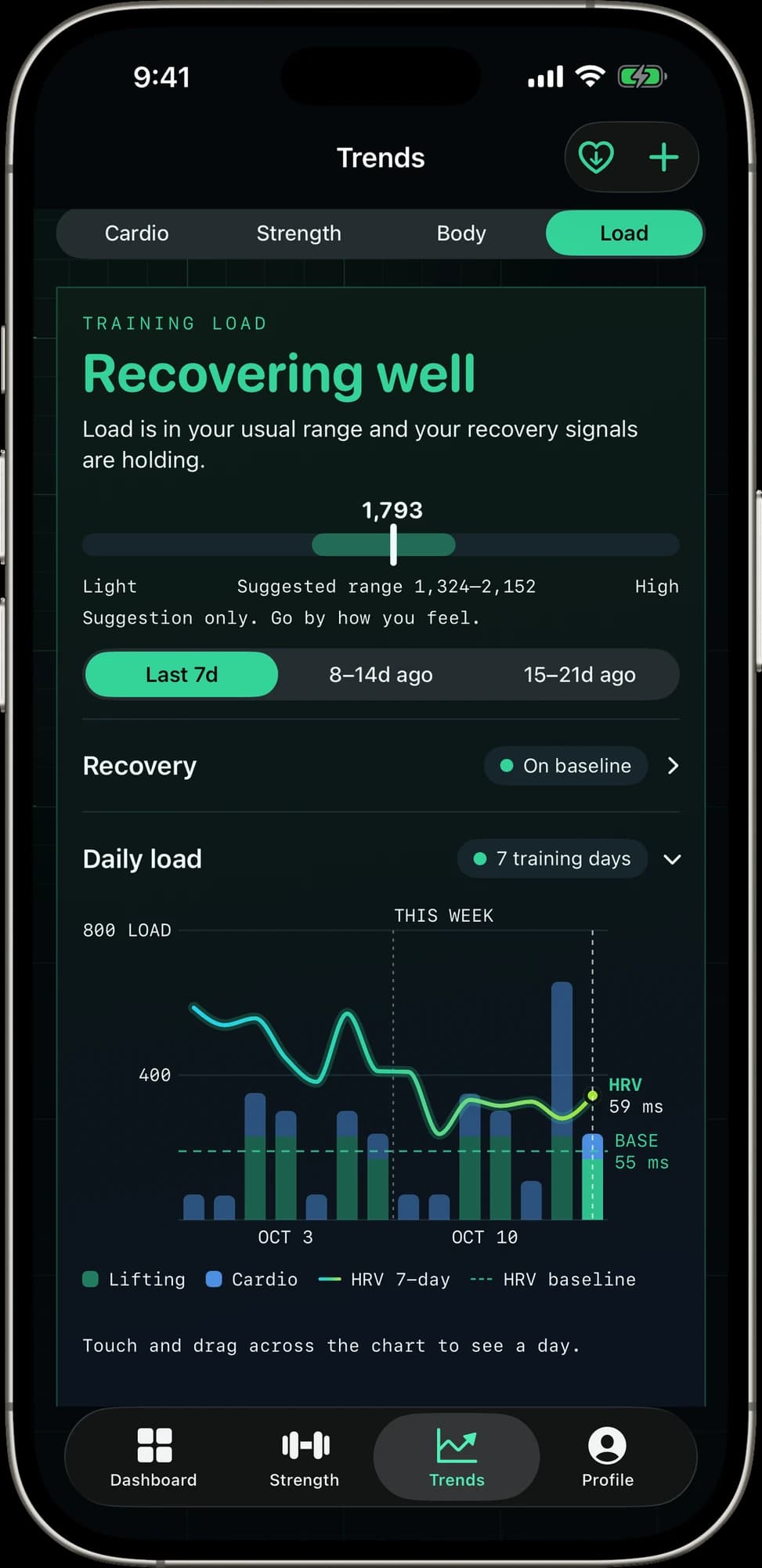
This is the same logic behind why Fortiv's Adherence Engine flags an Ease Up state instead of just rewarding more volume: good adherence with declining recovery isn't a signal to push harder, it's a signal you're past the point where more effort is buying you anything. The system caps effort on purpose, because the win was already banked a while ago.
Know which zone you're actually in before you decide the next five pounds are worth it. Most of the time, they're not. The win already happened, a few phases back. For the same "stop reacting to short-term noise" logic applied to bad weeks instead of body fat targets, see why one bad week isn't the failure mode and, for the training-side version of "leave margin instead of pushing to the edge," why training with reps in reserve beats training to failure after 35.